Carnival HUB
Released Jan 2015 — full fleet

The first edition of our annual independent analysis — seven ocean cruise guest apps examined for features, update frequency, third-party tools, and security. The benchmark year for a series that would follow the industry through its most turbulent decade.
Mobile apps are increasingly important for gaining a competitive advantage in the cruise industry. Cruise guests are beginning to expect that a useful and reliable mobile app will be part of their experience. Most major cruise lines now have at least one primary guest-facing mobile application.
The purpose of this report is to publish our research on these apps and their features, identify best practices based on in-depth experience as cruise guest app developers, and share our perspective on trends.
Learn moreThe apps chosen for this report met the following criteria:
Data and information were collected from app analyses via VirusTotal, discussions with professionals in the cruise industry, first-hand experience, articles, online reviews, and demonstration videos.
Android APK reverse engineering tool, maintained by Sourcetoad's Director of Engineering.
APK analysis service used to supplement direct decompilation.
Mobile Security Framework — static analysis for Android and iOS.
The scope of our inaugural report includes passenger-facing apps that are designed to work onboard the cruise ship. This year's report analyzes seven apps across ocean cruise lines.


Norwegian iConcierge note. For most of 2018, Norwegian iConcierge (released April 2012, updates stopped October 2017) was the only app available on Breakaway, Dawn, Epic, Escape, Jade, Jewel, Spirit, Star, Sun, and Pride of America. Cruise Norwegian expanded to the full fleet in 2019, effectively replacing iConcierge across all ships.
Once an app is live, regular updates are important. As operating systems are updated and new hardware devices are released, software has to adapt. Update frequency gives us a general idea of how often developers are fixing bugs, responding to feedback, and making improvements. Royal Caribbean and Celebrity — sharing a development team — led the field.
Approximate values derived from app store update frequency charts in the original report.
Each app we analyzed contained a fairly broad selection of features. To better compare and contrast offerings, we broke them into three categories: Common (almost standard across all apps), Less Common (appearing in at least three apps), and Stand-Out (differentiating, or found in only one app).
Features shared by the majority of apps reviewed.
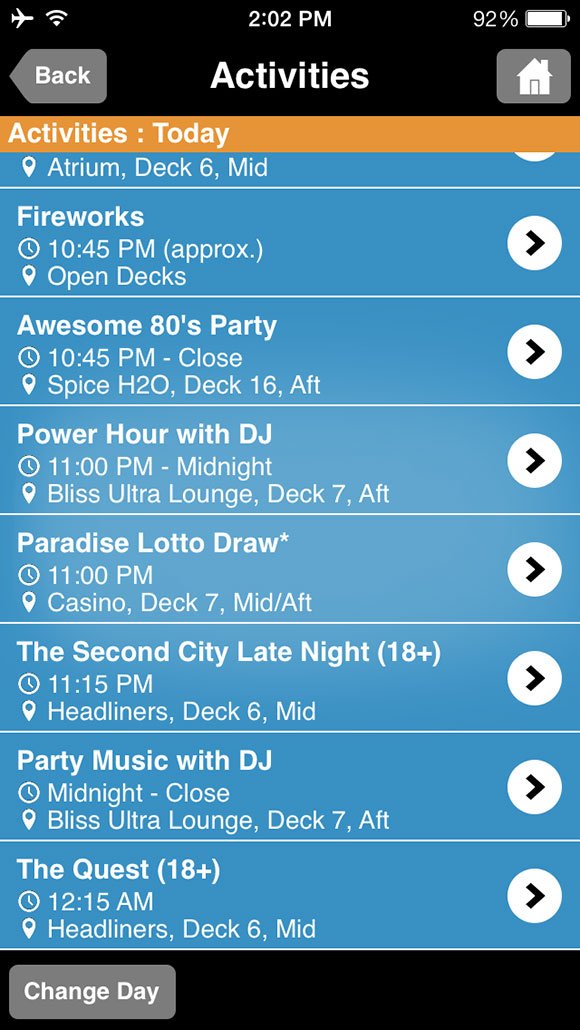
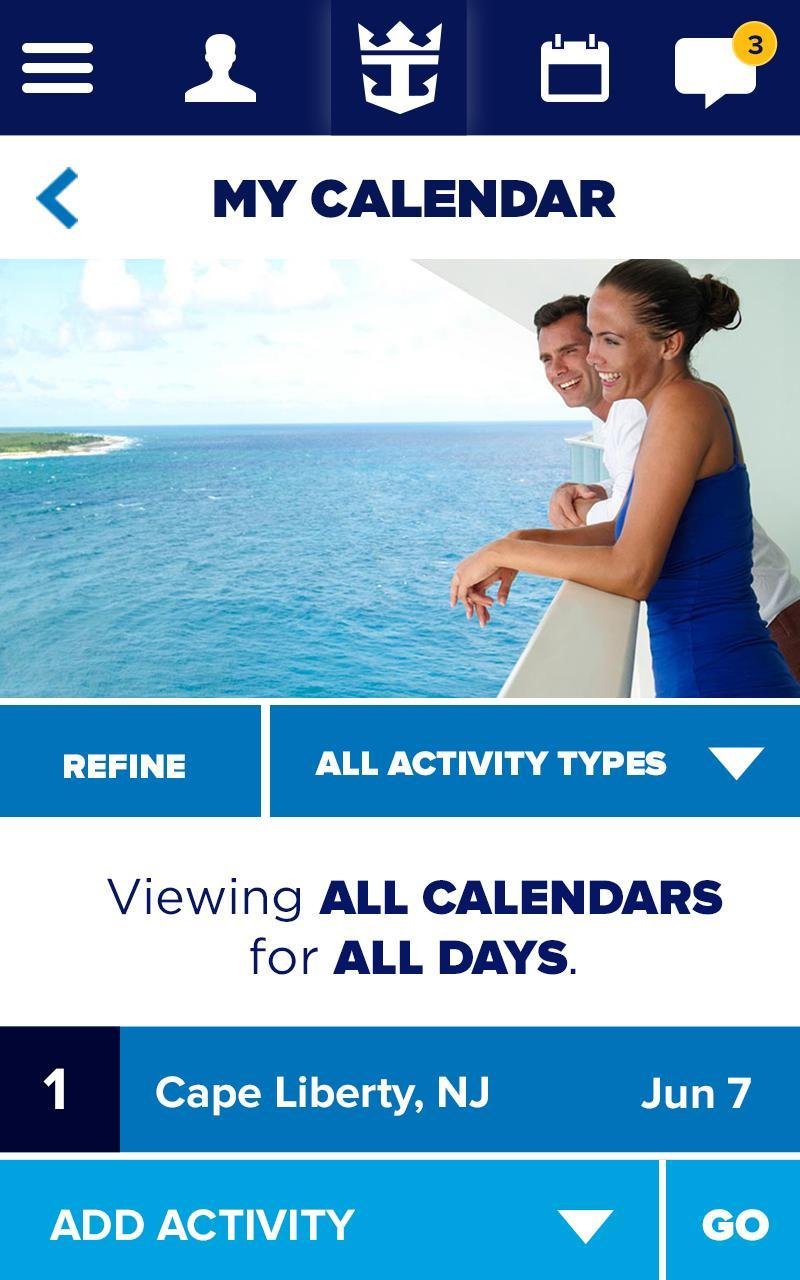
The main stop when planning activities for each day. Events can be added, booked, or marked — then move to the personal calendar.
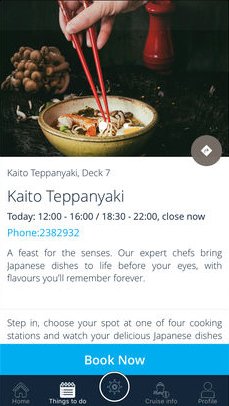
Every app has at least some information on dining options — hours, menus, images, locations, dress attire, reservations, and reservation cancellation.
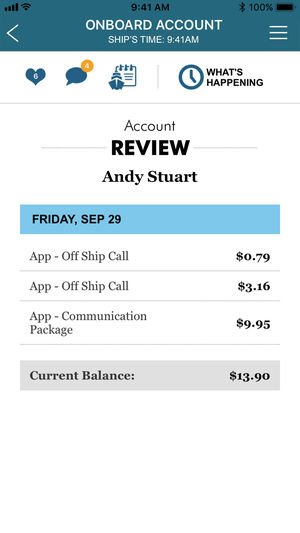
An itemized billing statement that updates when guests make purchases — important for avoiding bill shock at the end of a cruise.
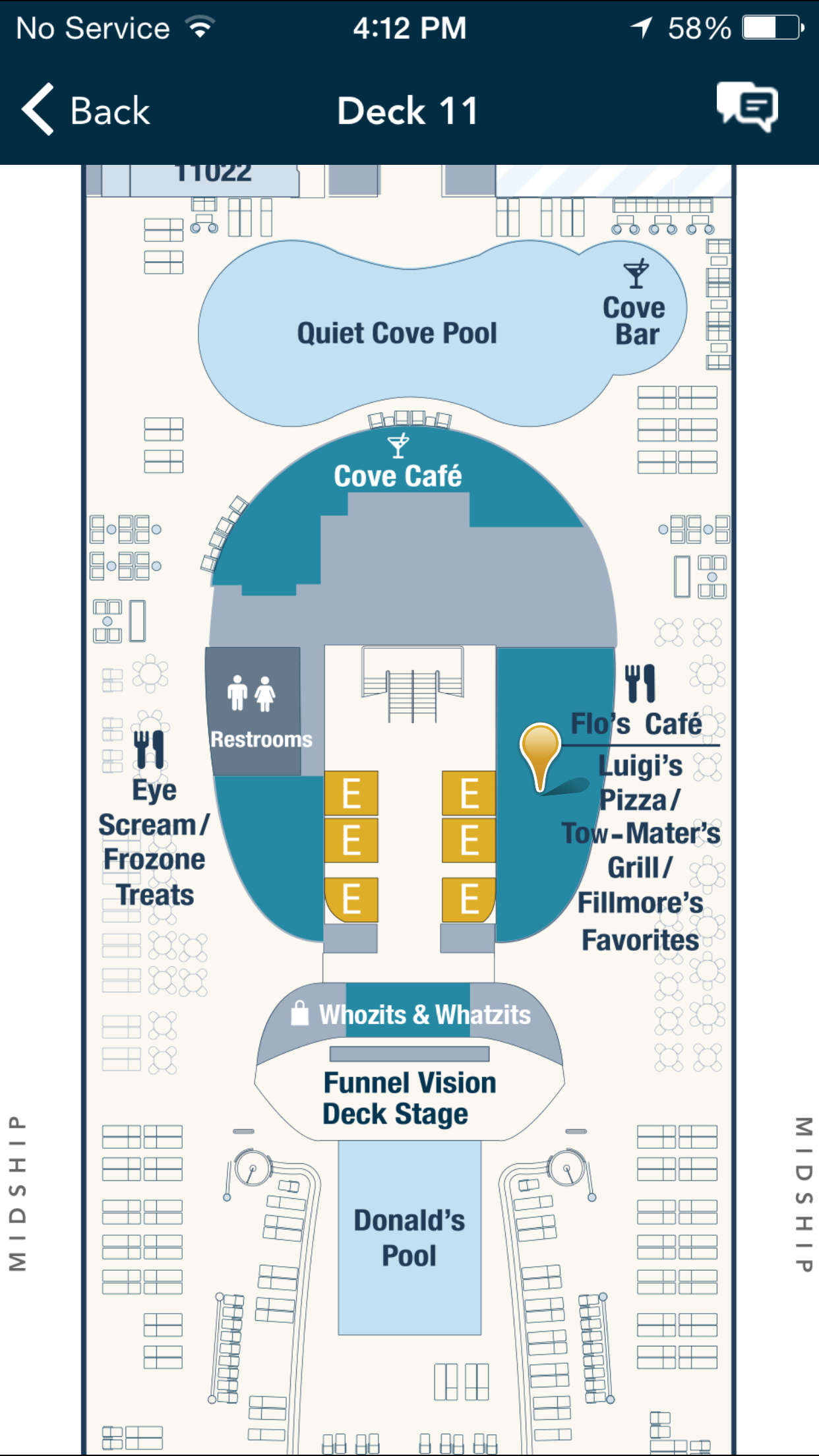
Although there are varying levels of detail and interactivity across apps, deck plans are a ubiquitous feature and critical for guests navigating the ship.
The guest's customized schedule. Once an activity has been chosen or booked, it appears here.
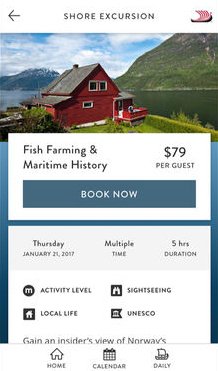
There is a range of levels of detail and booking ability across apps, but most allow guests to both research and book an excursion from their phone or tablet.
Shared by at least three apps — likely to become standard in coming years.
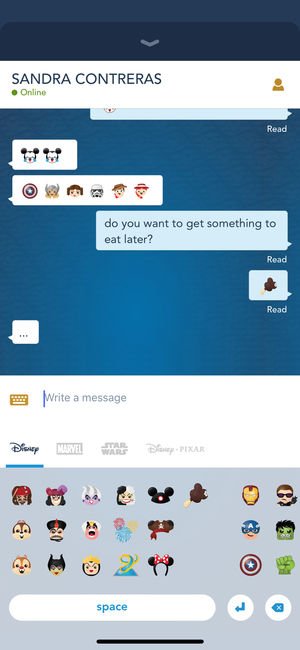
Chat is starting to become an expected feature. A handful of apps offer the ability to message members of your party, usually with a small additional fee.
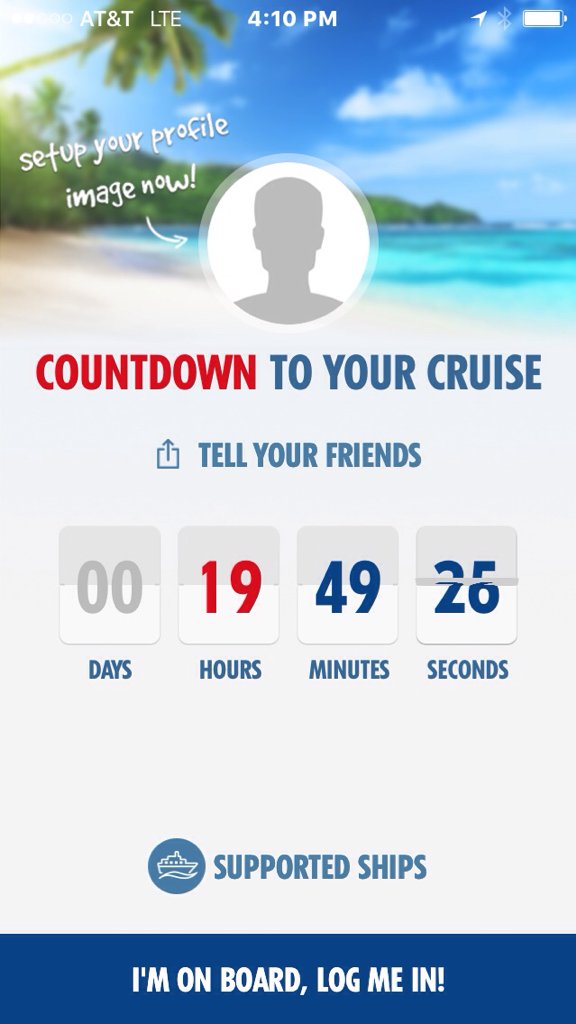
Some apps include a pre-cruise countdown that works before boarding. This feature builds anticipation and is becoming more popular across mobile applications.
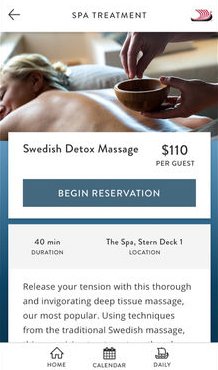
Most cruise lines have some kind of spa service — on a few apps guests can view the offerings and even make a reservation.
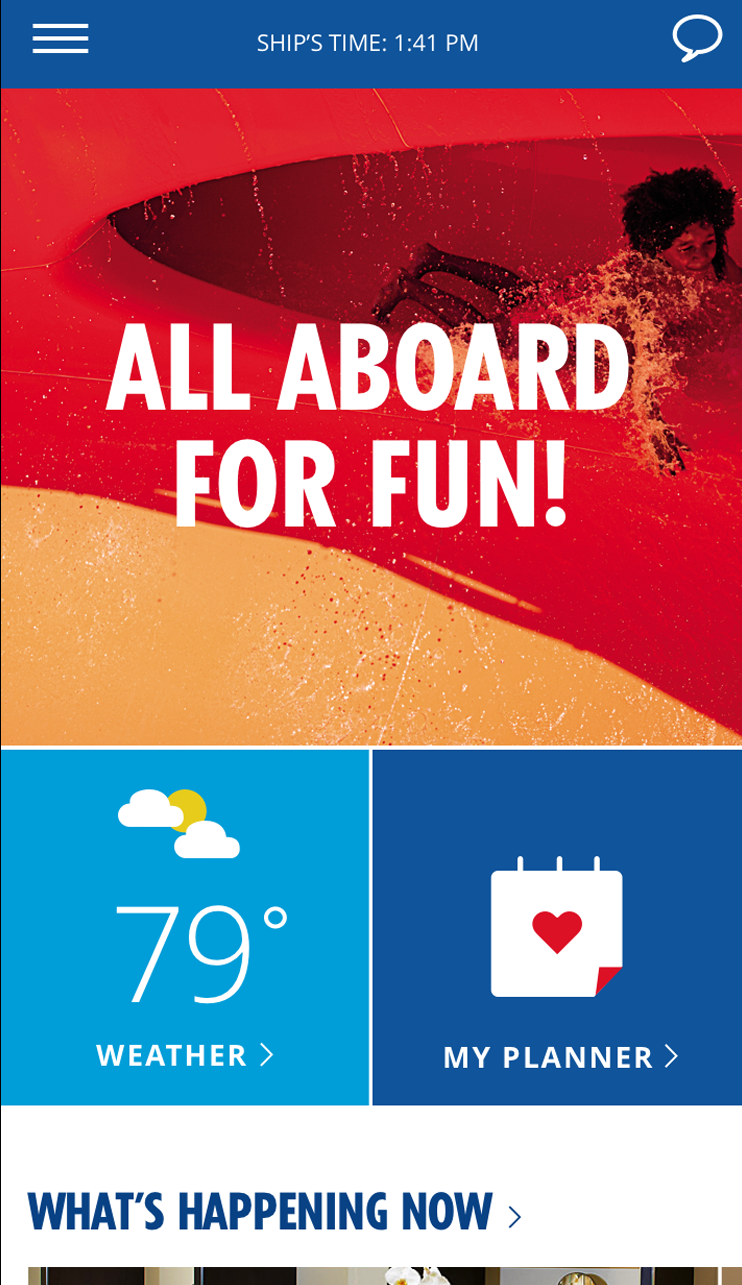
Having the current weather and forecast available is a useful feature, especially when planning a shore excursion or deciding on activities for the day.
Differentiating features found in only one or two apps.
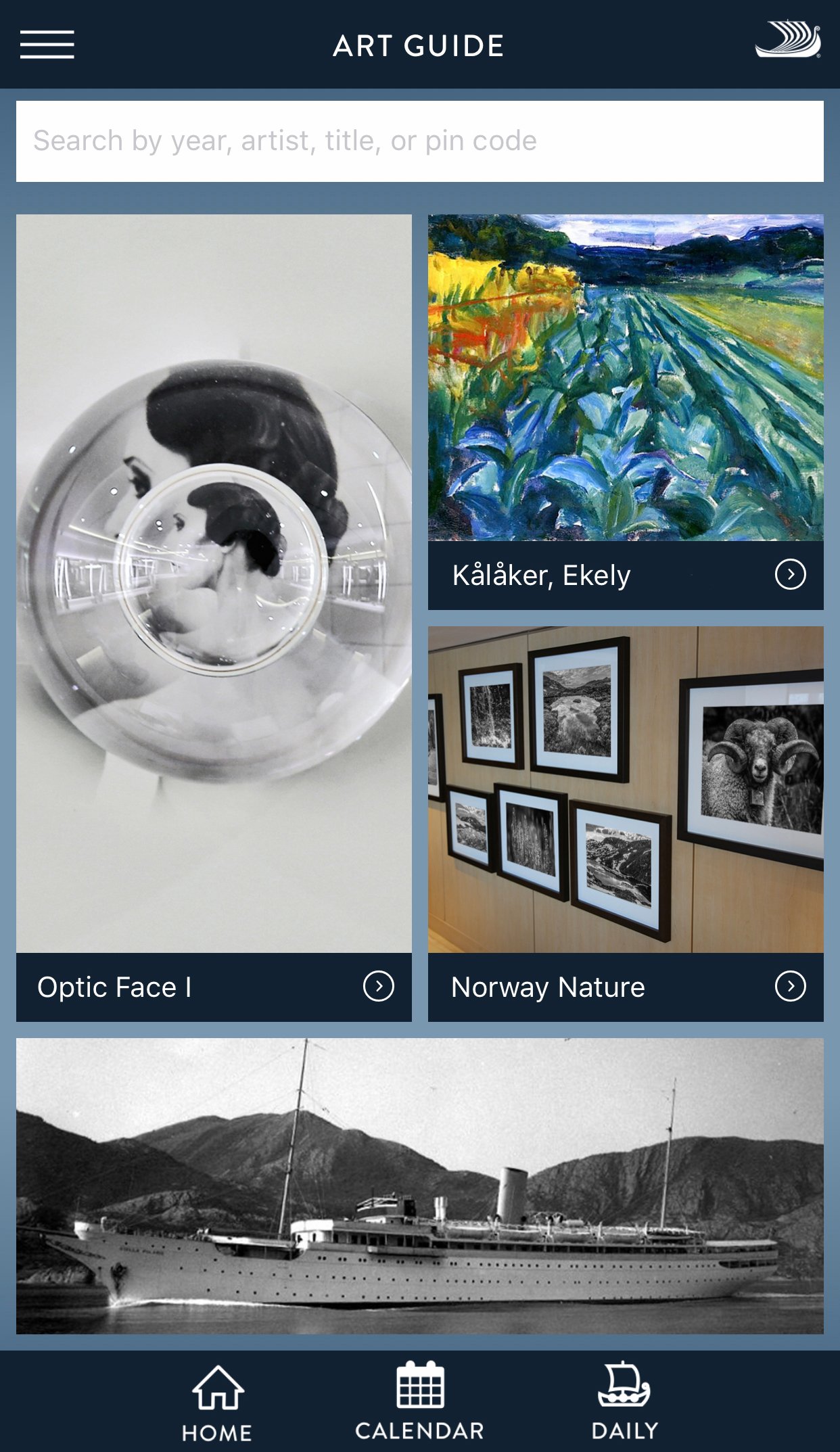
Viking Voyager includes an audio art guide — guests can listen to clips about historical pieces, works of art, and different areas of the ships.
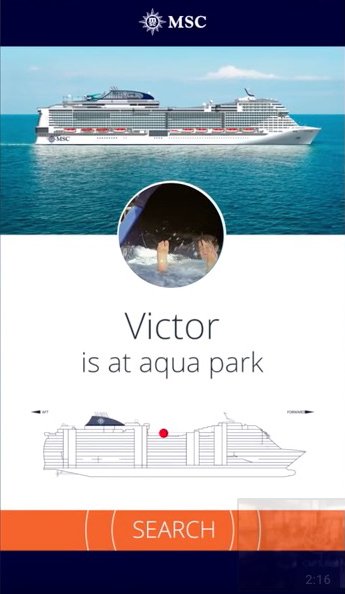
Parents can keep track of their children using MSC for Me. The feature is enabled for public areas of the ship using the app and an optional BLE wristband locator chip, provided to children for free.
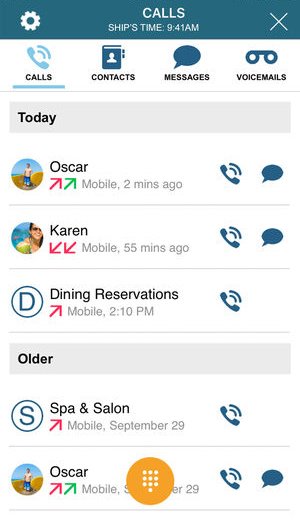
Along with a chat system, Cruise Norwegian has a call feature that allows guests to make unlimited calls to other guests for a small one-time fee.
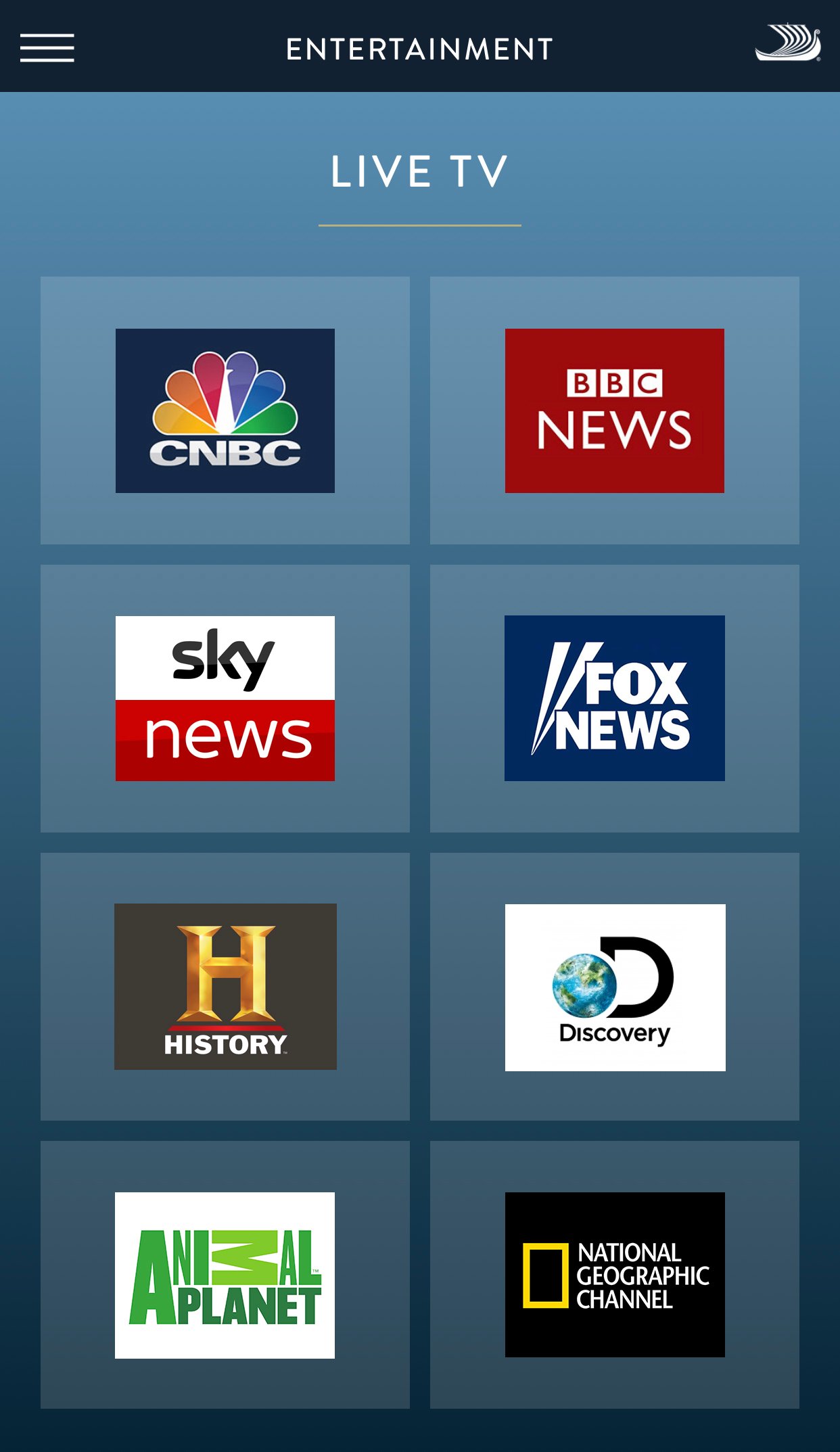
A complimentary feature on Viking Voyager — live television that works anywhere on the ship, letting guests sit by the pool and watch the news on their phone or tablet.
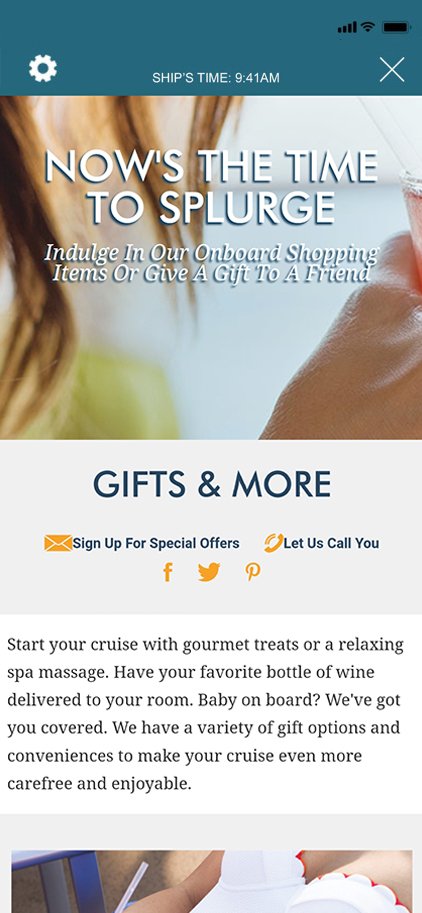
With Cruise Norwegian, guests can purchase gifts via the app before they even board the ship — options include wine, flowers, and treats.
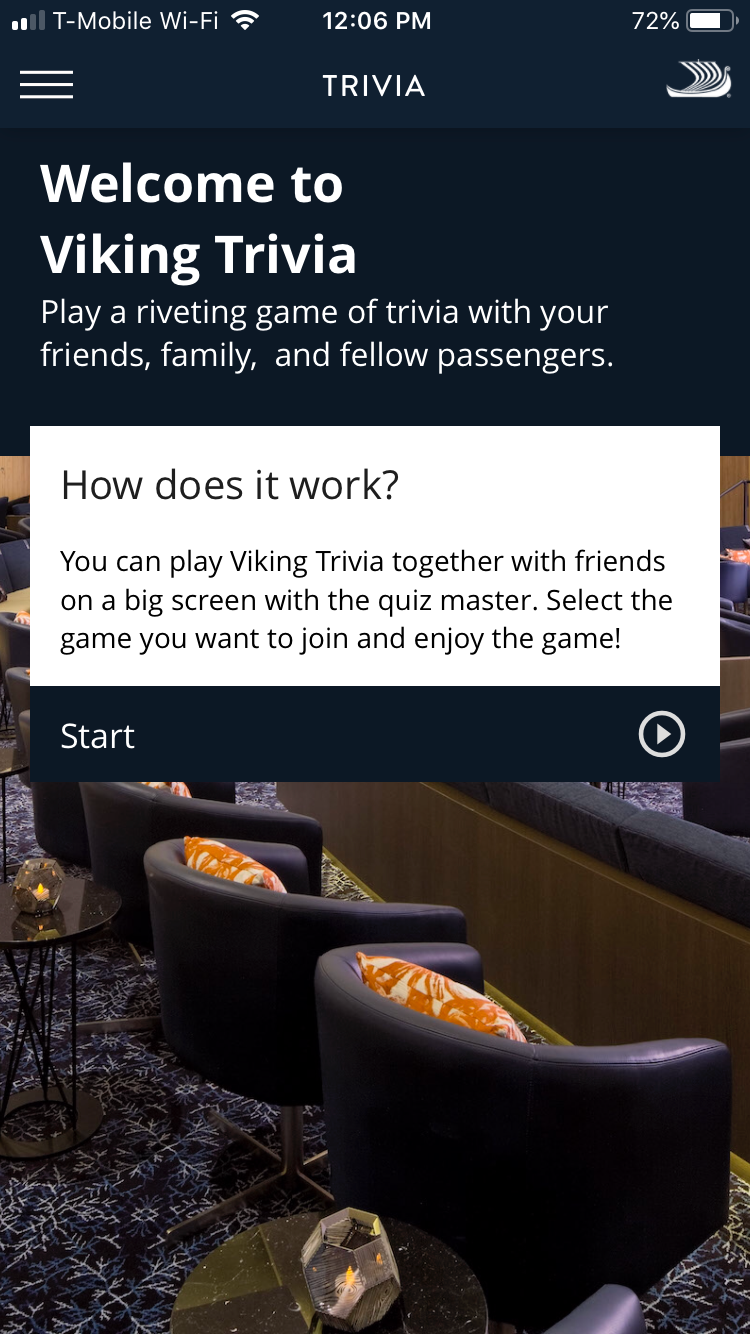
Viking Voyager has a trivia feature — guests can answer trivia questions from their phone or tablet while attending a scheduled trivia event on the ship.
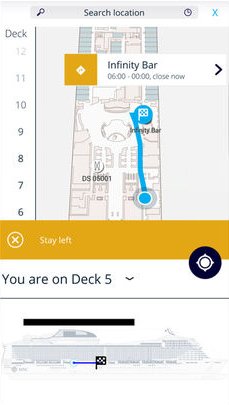
MSC for Me incorporates BLE beacon wayfinding into the map feature. The feature uses a Bluetooth Low Energy beacon system to help guests find their way within 16 feet of precision.
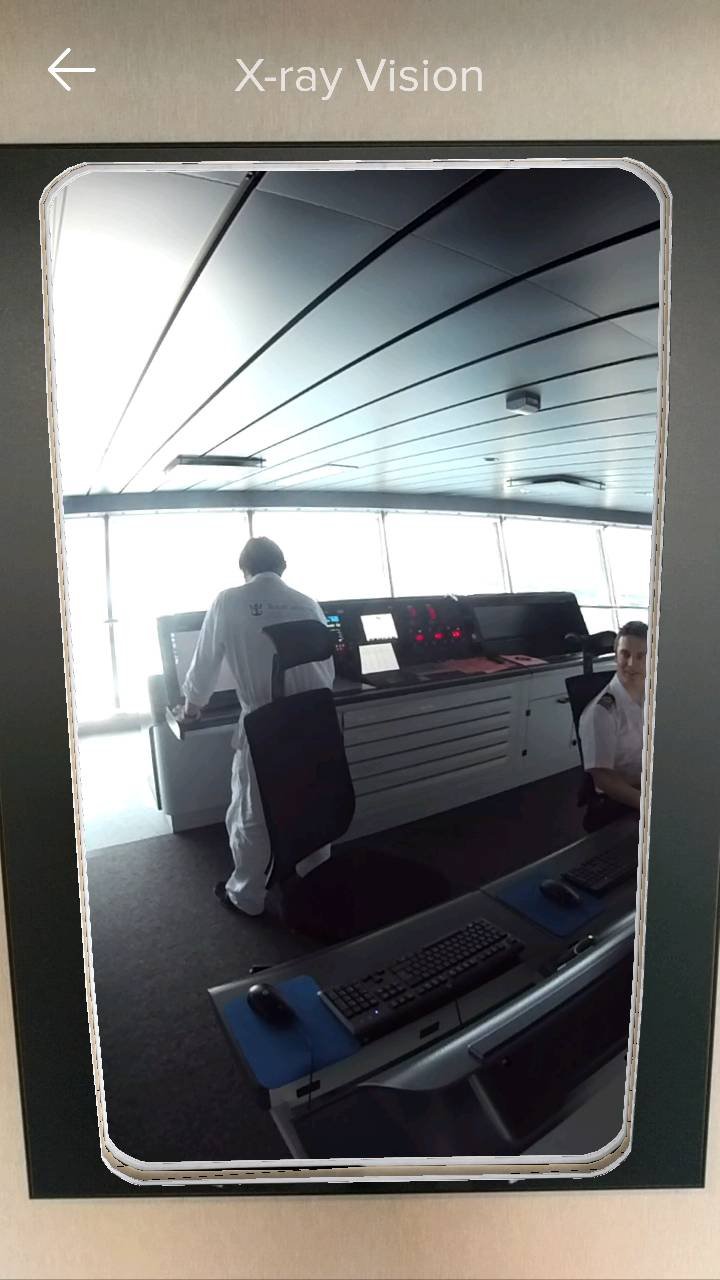
Royal Caribbean International has incorporated an AR-like experience into their guest app. Guests can virtually look through walls to explore normally inaccessible areas like the galley and the bridge — using a live video feed.
In 2019, almost all apps analyzed were predominantly native — written in Java or Kotlin for Android platforms and Objective-C or Swift for iOS platforms. There was one exception: React Native. The industry is currently homogeneous in its technology choices, but divergence is already visible on the horizon.
One app in the field is built using React Native — a cross-platform framework that allows developers to write code once and deploy across both iOS and Android. React Native apps are harder to distinguish from native apps for end users, though developers often trade some performance and platform-specific capability for faster development cycles and a shared codebase.
Cruise applications have an uncommon constraint: they act differently based on the network the guest has joined — onboard versus standard internet. An external settings file works by requesting a file from a specific domain with configuration flags. Once connected to the onboard network, this file returns different flags than it returns on a standard internet connection. This can be expanded greatly beyond simple configuration flags, and we noticed this pattern of development in many applications.
A couple of cruise apps use a VoIP phone system for onboard calls. Some applications, however, have a SIP client library bundled inside them without any phone feature — likely to enable real-time background push notifications. If a ship is not connected to the internet, background pushes can take up to an hour. Including a SIP library allows an app to get messages instantly (as VoIP apps require). This is risky: Apple has caught and banned apps doing this before, and it has been deprecated in later iOS versions. Apple now requires all VoIP apps to use PushKit (which requires Apple server connectivity).
Cruise lines are rapidly adopting virtual reality and augmented reality technology for multiple purposes. Royal Caribbean's X-Ray Vision is the leading example — but these are still early experiments. The technology is becoming both accessible and operationally desired, and we expect it to move from stand-out to expected over the next few years.
Decompiling each app surfaces the third-party libraries bundled into the binary. Below are the most significant tools found in 2019. Analyzing package names and test account information also provided insight into the development teams behind the code.
Found in most apps. Java bytecode optimization and obfuscation tool — any prying eyes have a lot more work to do instead of looking at bytecode equivalents of the protected source code.
Found in multiple apps. An HTTP proxy allowing developers to proxy onto the ship to debug issues on a real device. Finding Charles SSL certificates in production builds is a security concern — see Security tab.
Found in multiple apps. Detects crashes and sends all associated details to a specified location — storing errors offline and uploading when connectivity is restored. Critical when developers may be thousands of miles from the ship.
Found in multiple apps. Accenture has extensively publicized their involvement in the Carnival Medallion project and appears to be offering both full application development and augmentation of in-house teams in the cruise space.
Found in 2+ apps. Open-source enterprise CMS likely used to deliver marketing content and images to the app, and as an EFSS (Enterprise File Synchronization and Sharing) tool to coordinate shoreside digital assets for synchronization to onboard systems.
Found in select apps. A suite of onboard and shoreside software modules — iTV, digital signage, captive portal, mobile app creation, IoT device management, crew rosters, and PMS front ends. Custom modules are easily added for new technologies.
Developer teams. Package names and test account information were often clearly visible in the APKs. While it's problematic to make assumptions about specific developers without obvious evidence, the data confirms that development teams range in size from two full-time programmers to teams of around 20, and most are releasing updates every eight weeks or less.
The days of cruise ships being completely disconnected from the internet are quickly fading. Guests are no longer disconnected from the world when cruising — and a new world of exploits opens with a connected cruise ship. Imagine if a rogue application on a device pivoted to the shipboard network. The communications that cruise applications make available must be authenticated to prevent abuse.
We saw applications with no authentication on the requests being passed back and forth. For some apps, it was as easy as visiting a URL and changing parameters to change the responses given. This lack of authentication could be used for discovering guest information, or for booking reservations and purchasing items on behalf of guests without their permission. Statutes such as GDPR are making it tougher on developers and cruise lines to manage production and test data while remaining in compliance to protect personal data.
Publicly accessible development and test environments were common among the apps analyzed. These are necessary so developers can demonstrate updates to the cruise organization without sending staff onboard every time there is a release. However, many of these systems were not secured. Unsecured test systems can teach intruders how an application works — and could allow someone to buy themselves a cruise after wreaking havoc on the unsecured system.
Many of the apps include test — or "shim" — data inside them: a text file containing a fake passenger's details, calendar, folio, restaurant menus, available spa treatments, and shore excursion offerings. The reason this data is included is so Apple (or other testers) can test the app without connecting to a PMS or shoreside test database. The risk: this data could expose vectors of attack for hackers by providing insight into other onboard operations.
About 50% of apps investigated contained clear-text usernames and easily visible passwords. These credentials are for Apple's testers — because most cruise apps are designed to only work shipboard, testers need a way to trigger "onboard mode" with fake credentials. This leaves open the possibility that someone could log into the apps without paying for a ticket to board the ship.
We discovered a number of applications that contain a Charles SSL certificate — suggesting multiple cruise lines use this type of live debugging on production ships. Leaving debugging proxy certificates in production builds means traffic on those ships could potentially be intercepted. Overall, we are seeing cruise apps doing more and more — reservations, purchases, passport management, passenger communication — each representing additional vectors for attack and significant consequences if cracked.
A note on scope. Our analysis is based on static reverse engineering of Android APKs and publicly accessible endpoints. We do not perform dynamic testing, active exploitation, or any access beyond the publicly available binary and network. Security cannot be taken lightly: protecting guest information is extremely important, not just for public opinion and optics, but to address legal concerns as well.
There is an increasing number of stand-out features, and we have identified several emerging trends among the various brand categories. As expected features become standardized across the industry, opportunities for real innovation will present themselves. Get ready to see the guest mobile app front join the branding features arms race.
One area that few cruise apps have entered is downloaded "packaged" data — stored locally on the user's device for use in an offline context. Examples include walking maps, tour suggestions, guidebooks, language tools, and shore excursion retailer offers. These could be stored on shipboard servers and dynamically downloaded into the guest's onboard app. A pre-downloaded shore excursion survey, for instance, could be background-pushed to guests when the app connects to BLE beacons on a tender. Less international bandwidth, instant load times, additional brand-tailored content.
Most apps do not offer much before the guest steps onboard. Because shoreside booking systems and shipboard booking systems often come from completely different vendors, cruise operators have prioritized app development for onboard systems. Other guest-facing tools are left to the web only. This will change industry-wide as guest expectations continue to rise and the value of BND (booked not departed) mobile cruise management grows.
Guest engagement is just as important post-cruise as it is pre-cruise. Features in this category are further down the road than BND features because they are marketing efforts rather than immediate revenue generators. Post-cruise engagement will push next cruises and planning tools, display special offers for returning guests, collect and present logo versions of voyage photos, entice guests to join membership clubs, and provide interactive marketing material of every kind.
AR and VR are rapidly becoming both technologically accessible and operationally desired. VR systems onboard could range from simple (an app allowing virtual ship tours on a phone screen) to ambitious (VR headsets in every stateroom so guests can explore premium suites to consider for their next cruise — try before you buy). Augmented reality is a larger challenge but offers beneficial use cases for the future of mobile apps — contextual navigation superimposed on deck views, or points of interest on the horizon.
Social-based features are rapidly rising in significance, with simple chat services being the most common. The next set of enhancements is more involved and trickier to execute — systems designed to encourage onboard passenger interaction could walk the fine line of privacy intrusion. But if guests see value and opt in, social features could include "find a shore excursion buddy" before the cruise, geolocation-based "dropped" notes, guest forums during the cruise, and even shipboard business networking.
With the increase of eco-conscious travellers, cruise lines are making environmental responsibility a selling point. Technology has a direct impact on sustainability goals while improving the bottom line. Digital newspapers, the daily cruise compass, guest surveys, shore excursion tickets — any paper product that can be replaced by an app is a clear win. Educational messaging for how guests can contribute to planetary health can also be pushed digitally, alongside integration with health apps for menu suggestions, fitness classes, and spa treatments.
The future for guest-facing cruise apps looks bright. There is clearly a handful of features that are becoming standard, but cruise operators are prioritizing very different features for enhancing their apps. This speaks to the number of unique perspectives on what each cruise line delivers for brand differentiation, and these priorities play out in actual guest-facing software that directly impacts each brand's product.
Cruise lines are taking their guest mobile apps quite seriously as evidenced by the amount of work invested in them. Most of the development teams are releasing updates every eight weeks or less.
The number of developers working on each app is also indicative of the size of the investment. Development teams range in size from two full-time programmers to teams of around 20.
As the expected features become standardized across the industry, opportunities for real innovation will present themselves. Differentiation and new features are competitive drivers in everything from shipboard amenities to online pre-boarding to booking systems — so get ready to see the guest mobile app front join the branding features arms race.
Get in touch